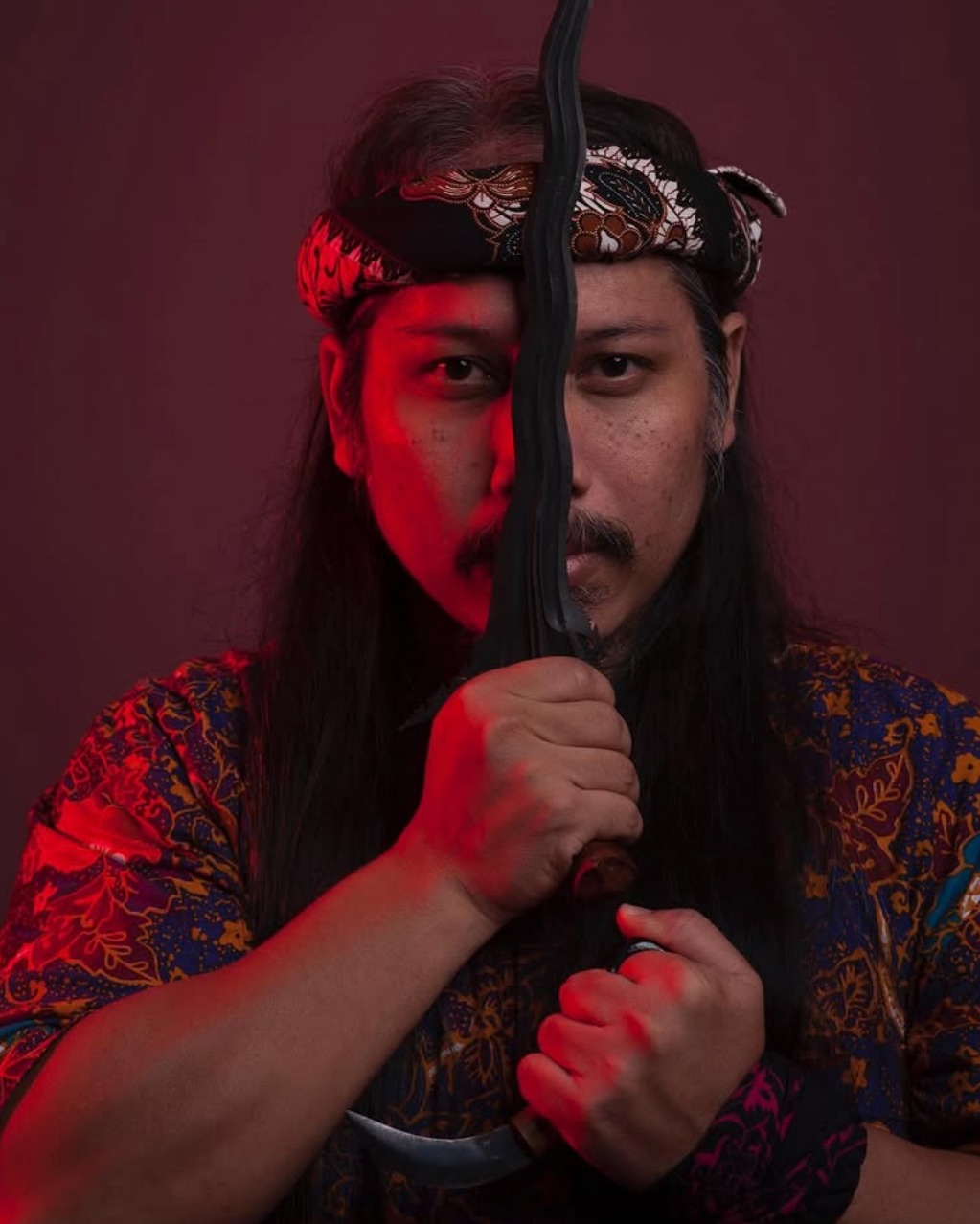
|
Silat - Seni Bilah Melayu - Malay Blade Art
ilmkhal's NotebookSee my products at ilmkhal Arsenal
|
|
Seven Blade Attack Situations That Actually Happen in Malaysia — And What They Mean for Your Safety5/17/2026 By Ilmi Khalid · Bladeart Studio · ilmkhal.com Most people think about knife attacks the way they see them in films. One person. One blade. A dramatic confrontation. The reality in Malaysia is different. It is messier. It is faster. It is closer to home — sometimes literally. After years of teaching knife defence at Bladeart Studio in Klang Valley, I have noticed that the biggest gap in most people's safety thinking is not technique. It is context. People do not know what they are actually preparing for. So let us talk about that. Here are the seven most common blade attack situations in Malaysia — drawn from police data, court records, and news reporting. Understanding these is the first step toward genuine preparedness. 1. Armed Robbery — The Parang as a Tool of Fear This is the most common scenario where a blade appears in Malaysia. The weapon of choice is the parang — the long-bladed machete that most Malaysians will recognise from construction sites, farms, and unfortunately, crime reports. It is cheap, it is legal to own, and it is terrifying when held by someone demanding your wallet. The typical setting: a petrol station, a car park, a quiet commercial street, a 24-hour mamak in the early hours. One or two attackers approach. The parang comes out. The demand is simple: give us what we have, or we use this. What this means for you: The parang is not a knife. It is a slashing weapon with significant reach. Defensive geometry changes completely. The attacker is not trying to stab — they are trying to slash, and one clean hit to the arm or neck is catastrophic. Distance management is not optional here. It is survival. 2. Snatch Theft Escalation — Three Seconds or Less Snatch theft numbers in Kuala Lumpur rose sharply in 2024. Most are quick and non-violent — a motorcycle, a bag, gone. But the situation can turn lethal in a single moment. The trigger is almost always resistance. When a victim grabs back, or the bag strap does not break, or someone nearby tries to intervene — the attacker may produce a blade. At that point, what began as property crime becomes an assault. The attack sequence is under three seconds. You will not have time to plan a response. The only thing that saves you is prior awareness and prior decision-making. What this means for you: The most important decision happens before the attack. Know what you will and will not fight for. A phone is replaceable. Your brachial artery is not. 3. Group Parang Attacks — When It Is Not About You This category is specific to Malaysia and is genuinely dangerous because it operates on different logic than the previous two. A group arrives — usually by car, sometimes on motorcycles — and attacks with parangs. The violence is often indiscriminate. People nearby, people they did not come for, get caught in it. These incidents are typically rooted in personal disputes: debt, rivalry, perceived disrespect, gang territory. The intended target may be one person, but bystanders get slashed because they are present, or because they attempted to intervene. What this means for you: You need to recognise when you are near someone else's problem. The pre-incident indicators are there — elevated tension, specific people being watched, vehicles that do not belong parked nearby. Recognise them and leave before it starts. 4. Domestic Violence — The Blade in the Kitchen This is the one that gets the least attention in personal safety discussions, and it should get the most. The kitchen is the most dangerous room in a Malaysian home when a relationship turns violent. Knives are there. They are within reach. And in the escalation of a domestic incident — an argument that crosses a line — a knife can appear with no warning and no planning. Police recorded over 7,000 domestic violence cases in Malaysia in 2024. These numbers represent reported cases only. The real number is higher. What this means for you: Blade defence is not only a street skill. If you are in a relationship or a home environment where tension regularly escalates, you need to think about this. You also need to think about the people around you — colleagues, students, employees — who may be living with this and not saying anything. 5. Altercation Escalation — The Argument That Goes Wrong Road rage. A stall dispute. A carpark confrontation. A relationship that crosses the line. An argument that begins with words and ends with a blade — not because the attacker planned it days in advance, but because the moment arrived and something was within reach, or something was already being carried. This is the category where the Ketereh case belongs. On 30 April 2026, 19-year-old Nurfisya Zulkifly was found dead in a paddy field in Kampung Simah, Ketereh, Kelantan. She had been a KPTM college student, one week into her new semester. Police believe she was driven to Ketereh by her 19-year-old boyfriend when she received a call from another male friend. An argument erupted in the car. The boyfriend allegedly pulled out a knife and stabbed her before dumping her body in the dark paddy field with no street lighting. The primary suspect has since been charged under Section 302 of the Penal Code, which carries the death penalty. The post-mortem recorded 61 stab wounds. A single knife. A boyfriend. An argument about a phone call. The forensic pattern — extreme wound count driven by intimate partner rage — is consistent with what investigators call overkill: an attack that does not stop at any rational threshold. The attacker was no longer responding to the situation in front of him. He had lost all access to restraint. This case also sits at the painful intersection of femicide — the killing of women by men, often intimate partners, driven by possessiveness, jealousy, or the inability to accept a woman's autonomy. It came on the heels of another high-profile case: the October 2025 stabbing of a 16-year-old girl by a 14-year-old boy at SMK Bandar Utama Damansara 4. The pattern is not a coincidence. What this means for you: The most dangerous person in a blade attack is not always a stranger. It is sometimes the person sitting next to you. Understanding escalation cues — rising anger, physical positioning, a hand that moves toward a pocket or waistband during an argument — is as important as any defensive technique. De-escalation is not weakness. It is the first line of defence. And recognising when a situation has gone beyond words — and getting out — may be the most important decision a person ever makes. 6. Youth and School Violence — An Emerging Reality In October 2025, a 16-year-old girl was stabbed to death at SMK Bandar Utama Damansara 4 in Petaling Jaya by a 14-year-old male student. The cause was not gang rivalry or random violence. She had rejected his romantic advances. He came to school with a knife and killed her for it. The post-mortem recorded 200 stab wounds. The injuries were heavily concentrated on the right side of her body, running continuously from her neck down through her lungs to her thigh. 200 wounds. A 14-year-old. A school corridor. A girl who said no. This is the same emotional logic as the Ketereh case — a male unable to accept rejection, a blade as the instrument of that rage — except here the victims and perpetrators are children. The overkill pattern is identical: an attack that does not stop, a person who had lost all access to restraint. It is a pattern that is becoming harder to ignore. Young men who have not been taught to process rejection, loss, or the word "no" — and who have access to blades. What this means for you: If you are a parent, a teacher, or a school administrator — this is not a gang problem you can screen for at the gate. It is a relationship violence problem that requires early conversations about consent, rejection, and emotional regulation. Blade awareness in schools starts long before the blade appears. 7. Targeted and Premeditated Attacks — The Rarest, But the Most Serious Premeditated knife murders in Malaysia are statistically rare. Intentional homicides fell to 237 cases in 2024 — in a country of 33 million people. But when they happen, they are devastating. Debt-related killings. Organised crime settlements. The attacker has made a decision before approaching. What this means for you: If you are in a conflict — a business dispute, a relationship breakdown involving money — where you genuinely believe someone may want to hurt you, the advice changes. This is not about awareness or de-escalation anymore. This is about changing your patterns, not being where you are expected to be, and seeking professional help. The Pattern Underneath All of This Looking at all seven scenarios together, a few things become clear. Most blade attacks in Malaysia are not about the blade. They are about something else — money, fear, anger, jealousy, desperation — and the blade is how that something else gets expressed. Understanding the underlying motivation tells you more about how to respond than any technique ever will. Speed is the constant threat. Whether it is a robbery, a snatch theft, or an argument that goes wrong — the transition from safe to dangerous takes seconds. Anything you are going to do, you need to have decided before the situation begins. Awareness is not paranoia. Knowing these seven scenarios does not mean you should be afraid to leave your house. It means you should be awake when you do. This is exactly what we teach at Bladeart Studio — not fear, but clarity. Not reaction, but readiness. Train Blade Defence with Ilmi Khalid at Bladeart Studio Bladeart Studio is a safe and welcoming martial arts learning space in Klang Valley — home to Seni Bilah Melayu and Bladeart Tomoi, grounded in respect, humility, and lifelong practice. If reading this has made you want to do something about your preparedness — here is how to start. Regular Night Classes Monday to Friday, 8.30pm to 10.00pm. Open to all levels. A consistent, structured environment to build your skills over time.
All sessions by request and subject to schedule. 📧 [email protected] 📱 WhatsApp: 011 2325 0124 🌐 bladeartstudio.com — for more information on all programmes and training options Enter. Train. Progress. Ilmi Khalid is the founder of Seni Bilah Melayu and head trainer at Bladeart Studio, Klang Valley. Seni Bilah Melayu is his own system, built from his training under the late Guru Jak Othman in Silat Harimau Berantai and Silat Tomoi. He specialises in knife, kerambit, kapak kecil, tekpi, and keris, and is currently deepening his study of the Malay sword under Guru Wan Yusmar, founder of Silat Sekilat. He teaches in person in Klang Valley and remotely from Bladeart Studio to anywhere in the world.
→ bladeartstudio.com · @ilmkhal
0 Comments
Somewhere in the city, late evening. People are moving a little differently these days. More alert. More aware. Phones held a bit tighter. Eyes scanning a bit longer before stepping forward. It is not panic. But it is not the same as before either. A World Under Pressure We are living in a time where pressure is quietly increasing. Cost of living rises. Commitments grow. Expectations do not slow down. Most people carry on. They work, they provide, they take care of what is in front of them. But not everyone handles pressure the same way. And when pressure builds without control, sometimes it spills over. Not everywhere. Not all the time. But enough for us to notice. Enough to think. The Question We Avoid At some point, a question appears. Not loudly. Not dramatically. Just quietly, somewhere at the back of the mind: If something happens, am I ready? Not ready in theory. Not ready in a cinematic sense. But ready in a real, physical, practical way. Ready to move. Ready to respond. Ready to protect. We Do Not Train After Many people come into training after something has already happened. After fear. After regret. After a close call. But the truth is simple: We do not train after something bad happens. We train before. Training is not a reaction. It is preparation. Capability, Not Aggression There is a misunderstanding when it comes to training with weapons. Some assume it is about aggression. It is not. True training is about awareness, control, discipline, and responsibility. A blade is dangerous. But understanding how it moves, how it threatens, and how to respond to it is not about violence. It is about knowledge. And when knowledge is guided properly, it becomes protection. Understanding the Blade A blade changes everything. Distance becomes more important. Timing becomes more critical. Small mistakes carry greater consequences. This is why training must be honest. Not complicated. Not flashy. Not designed for show. Just what works. Simple, structured, repeatable movement. Clear positioning. Direct response. Why Blade Intensive Saturdays Exist At Bladeart Studio, we run regular nightly classes in Tomoi and Silat blade methods. But not everyone can commit to a weekly schedule. Work hours. Family responsibilities. Unpredictable routines. Life moves. So the question became: How do we make training accessible, without lowering its quality? The answer is simple. We concentrate the training. Blade Intensive Saturdays
Knife Defence A focused training format for those who want to learn, even if time is limited. Not rushed learning. But concentrated learning. What Happens in Training This is not performance. This is not choreography. This is training. You learn how to:
Everything is structured. Everything has purpose. Nothing is added for show. Format Half Day — 3 Hours RM180 per person Full Day — 6 Hours RM300 per person Limited spots: 2–6 participants Private 1-to-1 training is also available for those who prefer focused personal instruction. (Private rates apply.) Who Should Join This program is for adults who want to train in a serious, calm, and respectful environment. It is suitable for working adults, men and women seeking practical self-defence skills, ladies who want greater confidence and awareness, older adults who want to remain capable, and martial arts practitioners who want a deeper understanding of knife defence. The training space is built on discipline, self-control, and focused learning. A Trust and a Responsibility In Islam, knowledge is not something we carry lightly. It is something we will be asked about. The Prophet ﷺ said: “The feet of the son of Adam will not move on the Day of Resurrection until he is asked about… his knowledge — what he did with it.” (Reported by Jami` at-Tirmidhi) To know something that can protect life, and then ignore it, is not the same as never knowing at all. Knowledge carries weight. Taking the Means There is a well-known narration where a man asked the Prophet ﷺ whether he should leave his camel untied and place his trust in Allah, or tie it first. The Prophet ﷺ replied: “Tie it and trust in Allah.” (Reported by Jami` at-Tirmidhi) This was not just about a camel. It was about understanding reliance. Trust in Allah does not mean neglecting action. It means taking the necessary steps, then placing your trust in Him. Take initiative. Applied to Training In our context, the meaning is clear. We hope for safety. We make dua for protection. But we also take the means. We learn. We train. We prepare. Not out of fear. But out of responsibility. Blade Intensive Saturdays is part of that effort. A structured space where knowledge is taught, practiced, and understood with discipline and restraint. Better to Be Ready KL and PJ are still home. But like anywhere else, things change. Better to be ready and not need it, than need it and not be ready. Better to be a warrior in a garden, than a gardener in a war. An Invitation This is not for everyone. But if this has been on your mind, then perhaps it is for you. Train before it happens. ilmi Khalid Seni Bilah Melayu Bladeart Studio Ilmkhal’s Notebook Violence involving knives is fast, chaotic, and unforgiving. It does not announce itself. It does not wait for strength, size, or readiness. For women especially, knife defence is not about bravado or proving toughness. It is about awareness, survival, and returning home safely. This is why I believe knife defence matters — and why now is the right time to begin. The Reality Women FaceMost knife attacks happen at close range. They are sudden. They are messy. Against a blade:
This is not fear-mongering. It is reality. Knife crime exists everywhere — including here in Malaysia. We see it in the news, in schools, in public spaces, in moments no one expects. Even if one has never personally faced a blade, the threat is real, and ignoring it does not make it disappear. At Bladeart Studio, we do not give women false confidence. Empty confidence is dangerous. Training is conducted with progressively increasing pace and intent, while safety remains the highest priority. The goal is not to look impressive — it is to understand the threat clearly and respond responsibly. Safety in TrainingFor training, we use safe, purpose-built training blades made from HDPE polymer plastic. These are designed to be safe to skin and fabric during controlled yet intense contact, allowing students to train realistically without unnecessary risk. Training is structured, supervised, and gradual. Safety is never compromised for spectacle. To defend against a blade, you must first understand how it attacks. That is why we first teach how a knife is used offensively, and only then teach how to defend against a proper, realistic knife attack. Defence without understanding the attack is guesswork — and guesswork is dangerous. Women, Blades, and Our Own HistoryWomen are no strangers to blade training — especially where Silat itself comes from. In this part of the world, the idea of women trained in blades is not imported. It is inherited. History records heroic women warrior-commanders such as Laksamana Keumalahayati of Aceh and Adruja Wijayamala Singa (Cik Siti Wan Kembang I) of the Kingdom of Grahi. One became the world’s first recorded female admiral of a navy. The other was entrusted with ruling her own kingdom for proven bravery on the battlefield. Both initially led women-only forces, many of whom were widows of fallen warriors. Laksamana Keumalahayati commanded the Inong Balee, elite women fighters who resisted Western colonising forces. In personal combat, she famously defeated a Dutch commander in a duel. Adruja Wijayamala Singa led the Seri Wijayamala, a women-only force that fought against invading armies from the north. Mounted on horseback, she is recorded to have struck down a powerful enemy king with her trusted blade. These are not symbolic stories. They are historical records of women who trained, fought, commanded, and survived. Women and blade training are not strange ideas here. Especially not now. Why I Wrote Basic Silat Knife DrillsBasic Silat Knife Drills was written for everyone — but it benefits women especially. The book focuses on fundamentals: structure, awareness, positioning, and responsibility. It avoids fantasy and avoids glorifying violence. The aim is understanding, not aggression. I also included historical warrior anecdotes — not to romanticise combat, but to remind us that discipline, courage, and restraint have always been part of our tradition. A Responsible Path ForwardKnife defence is not about winning fights.
It is about avoiding harm, surviving danger, and protecting life. For women who wish to train, this path is physically open here in Malaysia. You are not stepping into something foreign. You are stepping back into a lineage. I hope this article contributes — in a small but meaningful way — to the safety of those who read it. May it encourage awareness, responsibility, and thoughtful action. The Silat Triangle: Silat, Silap, Silau12/19/2025 On skill, mistake, and overwhelm in real combat Not too long ago--about a decade or so, probably a little more—I remember my late teacher Guru Jak of Silat Harimau Berantai speaking about three elements of Silat tactics that can be understood through what he described as a Silat Triangle. Silat. Silap. Silau. These three elements are not separate ideas. They work together—especially when facing a dangerous or determined opponent. What follows is my own interpretation of this Silat Triangle, shaped by years of training and lived experience learning under Guru Jak. This Silat Triangle is a tactical concept that explains how skill, disruption, and mistake interact in real combat. Silat — Skill and KnowledgeAt the top of the triangle is Silat.In this context, Silat represents your fighting knowledge, technical skill, and embodied understanding of the art. It is everything you have trained over the years—movement, structure, timing, weapon use, positioning, and intent. Although it is placed at the top of the triangle, Silat remains the foundation of the entire system. Without Silat, the other elements—Silap and Silau—cannot be applied effectively. This element cannot be rushed. Silat takes years of learning, repetition, and refinement. It is built through discipline and honest training. It is what allows you to recognise the moment—and act without hesitation. Silap — MistakeThe next element of the triangle is Silap, which means mistake. In real combat, mistakes are inevitable. What matters is who recognises them first—and who knows how to use them. If your opponent fails to protect himself properly, leaves a line open, overcommits, or loses balance, that is Silap. Your task is to immediately use your Silat to exploit that mistake. Silap can also be created. For example, you may feint an attack to the body, causing your opponent to lower his guard. When his head becomes exposed, you use your Silat to strike decisively. The mistake did not happen by chance—it was forced through deception. Silap is opportunity. Silau — BlindingThe third element is Silau, which means blinding light. When a strong light is shined into someone’s eyes, they instinctively squint or close them. Their vision collapses—along with their awareness. In Silat, one literal example of Silau is the eye jab. When applied in a real combat situation, Silau disrupts your opponent’s vision, focus, and composure—even if only for a brief moment. During that moment of visual disruption, your opponent becomes vulnerable. He is now making Silap. That is your opening to apply Silat and end the encounter. Silau, however, is not limited to the visual sense alone. Another non-literal meaning of Silau in this context is overwhelm. Just as bright light overloads the eyes, sustained pressure can overload the mind. When you launch multiple, continuous actions, arriving from different directions, angles, and levels, your opponent becomes overwhelmed. His ability to process information breaks down. His timing collapses. His defence becomes reactive and incomplete. In that state of overload, Silap appears—not by chance, but by smart design. That is when Silat is applied decisively to end the encounter. Practical illustrations of this idea, discussed in a training context, are explored in my book Basic Silat Knife Drills, available on Payhip and Gumroad. The Triangle in MotionSilat, Silap, and Silau do not exist in isolation.
This is the Silat Triangle in motion. It is not about brute strength or flashy techniques. It is about understanding human reactions, exploiting mistakes, and applying skill with clarity and purpose. May this reflection stand as a continuation of that teaching—and a reminder that Silat is not merely movement, but thinking in motion. If you’re interested in experiencing this way of thinking and training in person, you’re welcome to visit Bladeart Studio — our new training ground for Seni Bilah Melayu.
Bladeart Studio is a calm, focused space where training safety is our highest priority, and where learning is guided by responsibility, restraint, and respect for the art. To learn more about the studio and our training sessions, visit: https://bladeartstudio.com Important Note: Latest update was published on my Substack. The kain semutar is a traditional Malay cloth known for its simplicity, adaptability, and purpose-driven design. Commonly worn as a headcloth, it differs from ornate ceremonial headgear in one important way: it was made for practical use. In the Malay world, clothing was never separate from function. What was worn had to move with the body, withstand labour, and adapt to changing conditions. The semutar reflects this way of thinking clearly — simple in form, flexible in use, and ready when needed. A Cloth of Daily Life and ReadinessHistorically, the semutar accompanied warriors, silat practitioners, travellers, farmers, fishermen, traders, and seafarers through daily labour, long journeys, and moments of readiness. It was tied in a manner that was secure yet easy to untie, allowing it to be quickly released and reused when circumstances changed. This mattered. A cloth that could be loosened, removed, retied, or repurposed without fuss allowed the wearer to remain alert and adaptable. The semutar was not decorative — it was responsive. Beyond the Head: Wearing the Semutar at the WaistAlthough most often associated with the head, the kain semutar was never limited to a single position. It could also be worn around the waist, especially when circumstances required it. When tied at the waist, the cloth served multiple practical purposes: securing garments, supporting small tools or blades, keeping the hands free, functioning as first aid, and, when necessary, being used as an improvised tool. This flexibility reflects a wider Malay approach to clothing — items were worn according to function, not rigid convention. In silat practice, this way of thinking remains relevant. A cloth that can be untied quickly, adjusted easily, and reused without ceremony supports movement, readiness, and awareness. Printing Your Own Semutar TodayToday, kain semutar is not always easily accessible to Silat practitioners, particularly those living outside of Malaysia. To address this, I chose to offer print-ready semutar designs, allowing practitioners to print their own cloth locally using materials available in their area. This approach keeps the spirit of the semutar alive: adaptability, practicality, and personal use over display. Rather than producing finished garments, I provide the design itself—giving practitioners the freedom to choose fabric, printing method, and finish according to their needs. Recommended Fabrics and Printing Options
If cotton textile printing is not available locally, sublimation printing on sportswear-grade polyester is a practical alternative. This method produces a lightweight, breathable, quick-drying cloth suitable for training. This option has been discussed with my teacher, Guru Wan Yusmar, founder of Silat Sekilat, and is considered functional for modern silat training. For sublimation printing, light-coloured or white polyester fabric is recommended for best results. The Semutar Senjata DesignAs part of this exploration, I designed Semutar Senjata – Silat Pattern, a print-ready semutar design inspired by silat weapon forms and movement principles. The pattern is intentionally:
This makes it adaptable for training, filming, and daily wear — without locking it into fashion or trend. What the Digital File Includes
You can bring these files to any local print shop and print the semutar on your preferred fabric. 👉 View the Semutar Senjata digital design here: https://ilmkhal.gumroad.com/l/semutarsenjata (The semutar shown being worn in photos is for demonstration of use and wear. The product for sale is the digital pattern design.) Practice Made VisibleI use the semutar in training, teaching, and filming. I designed this pattern to be functional first — something that works in movement, absorbs sweat, and presents a grounded presence on camera.
This is not fashion. It is practice made visible. -- Ilmi Khalid Designer, ilmkhal Studio Head Trainer, Bladeart Studio A Crisis at the River Nile12/13/2025 Authority, belief, and an unusual test of leadership During the caliphate of Umar ibn al-Khattab (may Allah be pleased with him), Egypt was still shadowed by an inherited fear from a pre-Islamic age. Each year, when the Nile delayed its rise, people believed the river demanded a sacrifice. A young woman would be chosen, adorned, and offered to the waters so that crops would grow and life could continue.
The belief was simple and devastating: life depended on appeasing fear. Islam arrived to dismantle this belief — not through force, but through tauhid: the clarity that all power, benefit, and harm belong to Allah alone. When Egypt came under Muslim governance, its governor was Amr ibn al-‘As (may Allah be pleased with him), a man known for intelligence, strategic judgement, and political instinct. Long before Islam, he was recognised among Quraysh as a skilled negotiator, an accomplished horseman, and a capable warrior. As a merchant, he had travelled widely across Sham, Egypt, Abyssinia, and Yemen, gaining deep familiarity with lands and peoples he would later encounter as a Muslim. When Amr learned of the annual ritual, he prohibited it immediately. No river, no tradition, and no fear could justify the taking of a human life. Soon after, the Nile’s waters receded. Crops failed. Anxiety spread. Voices rose across Egypt demanding the return of the old ritual. Appease the river, they said — or Egypt will perish. Amr recognised that this was not a logistical problem or an administrative failure. It was a crisis of belief. This was not a situation that could be resolved with force, policy, or precedent. It required clarity — and restraint — at the highest level of leadership. So what did Amr ibn al-‘As do next? I explore his response, and the remarkable solution that followed, in the full reflection on Substack: 👉 Read the complete essay here: https://ilmkhal.substack.com/p/a-firm-message-to-the-river-nile by ilmi Khalid Rembrandt and the Dutch Golden AgeRembrandt van Rijn (1606–1669) is one of the greatest painters of the Dutch Golden Age—celebrated for his mastery of light and shadow, emotional realism, and dramatic storytelling. Influenced by Pieter Lastman, Caravaggio, and Rubens, Rembrandt transformed biblical moments into vivid scenes of humanity, devotion, and tragedy. The Blinding of Samson (1636)One of Rembrandt’s most intense works is The Blinding of Samson, where he depicted a dramatic moment from the Biblical narrative of Samson: betrayed, overpowered, and subdued by his adversaries. Samson thrashes in agony. One attacker restrains him. Another drives a dagger toward his eye. And the betrayer, Delilah, flees in the background holding the locks of hair she cut from his head. In the Biblical narrative, Samson was captured in the Valley of Sorek, a borderland region, before being taken to Gaza in chains. May God protect and strengthen the people and the warriors of Gaza today. Aameen. Rembrandt rendered the scene with explosive light, raw physical struggle, and deep emotional chaos. Few Western painters attempted this moment; Rembrandt embraced it fully, turning it into one of the strongest narrative paintings of the 17th century. A Malay Blade in a Dutch Masterpiece: The KerisA striking detail emerges when you look closer at the weapon in the attacker’s hand:
Rembrandt painted a keris — the iconic blade of the Malay archipelago or Nusantara. He had painted this same keris earlier in Samson and Delilah (1628), where Samson wears it at his waist. In The Blinding of Samson, the very same keris appears again — this time being used against him. How did a keris reach Rembrandt’s studio?Because Amsterdam in the 1600s was the heart of the Dutch East India Company (VOC). Ships returned from Java, Malacca, and the wider Malay Archipelago carrying:
It is highly likely that Rembrandt owned an actual keris, which he used as a studio prop. He even etched himself holding a curved dagger in Self-Portrait as an Oriental Potentate (1634), showing his fascination with Eastern aesthetics. The keris in The Blinding of Samson was not a historical detail — it was an artistic choice: dramatic, exotic, symbolic. Samson in Islam: Syam‘un al-Ghāzī (شمعون الغازي)While the Qur’an does not mention Samson by name, Islamic tradition does speak of a mighty warrior among the Children of Israel known as: Syam‘un al-Ghāzī — “Syam‘un the Warrior.” The HadithIn Sahih al-Bukhari (Hadith 2789), the Prophet ﷺ mentioned a man from the Children of Israel who fought in Allah’s path for a thousand months. Classical scholars — including Ibn Kathīr — link this noble figure to Syam‘un al-Ghāzī. His strength was a divine gift. His perseverance was an act of worship. His lifelong struggle in devotion inspired the revelation of Surah al-Qadr: “The Night of Power is better than a thousand months.” In Islam, Syam‘un is not portrayed as a tragic figure undone by desire. He is a mujāhid, a righteous servant of Allah known for discipline, devotion, and endurance. Lessons for the Silat Warrior1. Strength With PurposeSyam‘un’s power was not for pride. It was fi sabīlillāh — aligned with divine purpose. This reflects Silat’s true foundation: strength used to defend, protect, and maintain justice. 2. Discipline of Body and SoulSilat demands structure, humility, and spiritual alignment. Syam‘un’s lifelong devotion represents the balance every warrior must cultivate: ability to use the sword in the hand, humility through the remembrance of Allah in the heart. 3. Betrayal, Hardship, and PatienceJust as Syam‘un faced betrayal, the Silat path teaches us that the greatest battles are internal: against ego, temptation, nihilism, and doubt. True warriorhood is tested not in victory, but in endurance. And honestly… who among us can claim to have never faced these tribulations? 4. The Keris as a Symbol of IdentityThe keris is more than a weapon. It is a symbol of Malay heritage, craftsmanship, spiritual depth, and cultural identity. Seeing it immortalized in Rembrandt’s painting reminds us how the Malay Archipelago culture has touched even the canvases of European masters. Why This Matters TodayIn an age where words like jihad are misrepresented or stripped of their original meaning, retelling this story allows us to:
This is my voice, Ilmi's. I write to reclaim what is ours. See the Painting in PersonRembrandt’s The Blinding of Samson is on display at the Städel Museum in Frankfurt, Germany. If you ever travel there, it is a powerful feeling to witness a keris painted by a European master nearly 400 years ago. I hope that one day I’ll stand before this painting and witness its details with my own eyes. Train Silat with MeIf you wish to learn Silat, weapons and unarmed Malay combat arts, or explore the Malay blade traditions, join me at Bladeart Studio, now open in NZX Commercial Center, Ara Damansara. We offer a relaxed and safe space dedicated to martial discipline, where you can train in Silat, join our Tomoi Kickboxing program, and discover Hyoto Kai Jiujitsu, also known as Malaysian Jiujitsu. Start Silat Knife Training NowGet Basic Silat Knife Drills ebook now!
Why We Should Learn Knife Defense7/11/2025
by ilmi Khalid
In an unpredictable world, being able to protect ourselves and our loved ones is not just a skill—it is a trust (amanah) we carry. As Muslims, we are taught to uphold justice, preserve life, and stand firmly against oppression. These values are not abstract ideals—they are meant to be lived and practiced.
Latest video on my YouTube channel as of time of writing this blog post.
One way to embody them is by learning practical self-defense, including knife defense. Though some may see this as unnecessary or extreme, it is in fact part of a balanced approach to personal safety, preparedness, and dignity.
Here are some reasons why learning knife defense is especially relevant and important for Muslims today:
1. Preserving the Sanctity of Life
Islam teaches us that life is sacred. Allah ﷻ says: “And do not kill the soul which Allah has forbidden, except by right.” (Surah Al-Isra, 17:33) Learning to defend yourself is not about harming others—it is about preventing harm. If a life-threatening situation occurs, the ability to respond with knowledge and skill could be the means by which you protect your own life or someone else’s.
2. Fulfilling Our Responsibility to Prepare
The Prophet ﷺ taught us: “Tie your camel and then put your trust in Allah.” (Tirmidhi) This profound hadith reminds us that while we place our reliance on Allah, we must also take the necessary steps to be prepared. Locking our doors, securing our families, and learning self-defense are all expressions of responsible action. Training in knife defense is simply another way to fulfill this duty of preparedness.
Another knife defense video from my YouTube channel
3. Standing Up for the Vulnerable
In moments of danger, having the ability to act decisively and confidently can protect not just ourselves, but those who are weaker or unable to defend themselves. Islam emphasizes protecting the oppressed and the vulnerable. Whether it is your family, your community, or a stranger in need, having the skills to intervene can be an act of tremendous courage and compassion.
4. Cultivating Discipline and Self-Control
Knife defense, especially when learned through structured martial arts, builds discipline, humility, and self-restraint. These qualities are at the heart of good character. The Messenger of Allah ﷺ said: “The strong man is not the one who overcomes others by force, but the one who controls himself while in anger.” (Bukhari and Muslim) Training develops calmness under pressure and the wisdom to de-escalate conflict whenever possible.
5. Honoring Our Heritage and Identity
From the Silat of the Malay world to other Islamic martial traditions, our history is rich with knowledge about protecting life and upholding justice. When we learn traditional knife defense, we are also preserving a part of our cultural and spiritual heritage. It is a way of strengthening our identity and passing on the values of courage, respect, and service to the next generation.
Final Thoughts
Learning knife defense as a Muslim is about duty and responsibility. It is about fulfilling the trust Allah has placed in us to care for ourselves and others. It is also about living the universal Islamic principles of justice, preparedness, and mercy. I personally teach knife defense because I believe everyone should have the ability to protect themselves from harm. It is also my way of sharing Islam’s universal messages—courage, self-restraint, respect for life—and preserving the Malay values and martial wisdom that have shaped our identity for centuries. May Allah grant us the strength to stand firm for what is right, the knowledge to act wisely, and the humility to always seek His guidance. Aameen.
Ready to start your journey?
Watch my latest knife defense video on YouTube to see these techniques in action and discover more about our heritage.
Like and share if you find this video useful and empowering.
Get my ebook, Basic Silat Knife Drills, and learn step-by-step methods to protect yourself safely and responsibly.
Your journey to empowerment—physically, mentally, and spiritually—can begin today.
by ilmi Khalid
In my latest video, I share a simple but powerful knife exercise you can practice safely with a partner.
Watch it here: Knife Training Exercise – Seni Bilah Melayu https://youtu.be/G-Fg8OmGX_Q
When training with blades—even training knives—discipline is everything. One key principle I highlight in this session is keeping your hands close to your body. Why? Because when your hands wander too far forward, you’re offering them to your opponent. In Silat and other blade arts, this can mean the difference between control and disaster.
During this 7-minute tutorial, I demonstrate:
These drills are adapted from my book Basic Silat Knife Drills, which focuses on understanding the speed and violence of real attacks—so you can respond effectively.
I’m currently working on my next book covering knife defense and counters, and I’ll share updates soon. If you want to build your fundamentals or just get a good cardio workout, try the exercises demonstrated in the video. And always remember: Train responsibly, stay aware, and respect the blade. Watch the full video here https://youtu.be/G-Fg8OmGX_Q Get the ebook here https://payhip.com/b/XLkQ1
Till next time—keep it tight, keep it small, and keep training.
By Ilmkhal
It has been exactly one year since the passing of Guru Jak Othman—a teacher, a wise warrior, and a man whose impact on my life and the martial arts world cannot be put into mere words.
Through this man, I got to see the wonderful world of Silat, both in Malaysia and abroad. The way he carried himself—with a mix of humility, pride and genuine love for the art, left a lasting imprint on my heart. His presence could fill a room, and he had that rare ability to uplift everyone around him, with his charms, wits and his infectious laughter.
Before meeting Guru Jak, I tried a few Silat styles—either I left immediately, or I stayed for a few weeks. Something never quite clicked. But with Guru Jak, I stayed for years. I trained, absorbed, and kept returning. That, in itself, says everything about the kind of man he was. His aura, charisma, and deep skills and knowledge, had a way of pulling people in—and making them want to stay. That was his gift.
One of his most lasting contributions was through mass media. In the 1990s, Guru Jak hosted a prime-time television show on TV3 called Mahaguru, which brought Silat and other martial arts into Malaysian living rooms. It wasn’t just entertainment—it was education, or edu-tainment. For many, it was their first real encounter with traditional martial arts, and the show sparked a national interest in Silat that still echoes today.
In 2008, I had the honor of taking two weeks off from my work in TV creative department to assist Guru Jak in the production of Inside Silat, a documentary feature for TV that took us across Malaysia, filming various Silat subjects and masters. Those two weeks were an unforgettable experience—intense, insightful, and precious. The documentary later went on to win Best Cultural Documentary at the Malaysian Documentary Festival in 2009. I’m proud to have been a part of it, and even prouder that it was led by someone who directly teaches me Silat.
I also had the privilege of working with him behind the camera on other projects--producing Silat content together was always a great experience. With his background as a TV director, he had a clear visual language in his head. He knew exactly what he wanted from a shot, from a scene, from a story. The process was always fast, focused, and efficient. Working with him taught me not just about martial arts, but also about clarity of vision, storytelling, and the discipline to bring ideas to life. His style was explosive, fast paced, and loud. I learned to adopt and adapt his directing style through fast camera movements, dutch angles, following the actions, catching the hits, and in edit, his message to me was always, to cut on action. Waste no frames.
Beyond television and internet videos, he also left behind a written legacy. Guru Jak was a passionate writer, contributing powerful articles to local martial arts magazines. His words reached those who had never met him in person, yet still felt mentored through the pages. His writing didn’t just teach techniques—it cultivated mindset, ethics, and passion for the martial path. Many of today’s martial arts instructors and enthusiasts still remember those articles as formative.
For me, his Harimau Berantai system is in my flesh and blood. It shaped how I move, how I think, how I teach. I teach not because I’ve mastered it—but because teaching helps me understand it better. Every time I pass on what he taught me, I discover new layers I had missed before, and reminds me of the little details he passed on that I may have forgot. That, to me, is how his legacy lives on: through the continuous process of learning, sharing, and reflecting.
Silat, in Guru Jak’s eyes, was never just about fighting. It was about becoming a better human being—one who is kind, able to protect, and walks with dignity and humility.
I remember he said: “Have Silat will travel. I travel around the world to teach Silat because Silat can make people a better person.” Silat, when taught with values, becomes a vehicle of transformation—not just physically, but also spiritually.
Now, as I return to producing Silat shorts and planning more structured content, I’m reminded of how much Guru Jak’s spirit still lives on. From time to time, I receive video analytics—and people are still searching for his videos. His image, his words, his movements—they continue to teach, long after he's gone. He lives through his videos, and his knowledge is still spreading.
I’m grateful I got to witness it all—and even more grateful that I can now be part of preserving it. The Messenger of Allah (ﷺ) said: “When a man dies, his deeds come to an end except for three things: Sadaqah Jariyah (ceaseless charity); a knowledge which is beneficial, or a virtuous descendant who prays for him.” (Sahih Muslim 1631) May Guru Jak’s many students carry on his teachings, so that he may continue to benefit in his next phase of life. May his knowledge continue to spread, and may his reward never cease. Ameen.
The first and the last time I met Guru Jak was neither planned nor coincidence.
They were pre-destined--as Allah willed it. Whatever happened along the way between us will never change this truth: He was my Silat teacher. And he was the man who unlocked the world of Silat for me.
Continuing the Legacy
If you're interested in learning Silat from the foundation I received under Guru Jak—especially in small weapons—my ebook “Basic Silat Knife Drills” is now available. It’s more than a technical guide; it’s part of the legacy, passed on with intention and respect. Get your copy here https://payhip.com/b/XLkQ1 Let’s keep the knowledge alive. Let’s keep the stories sharp. Let’s keep walking the path.
I have got to go. I have morning class today. Keep training and stay motivated!
eBookShop HereAuthorILMKHAL. Archives
May 2026
Categories
All
|


RSS Feed